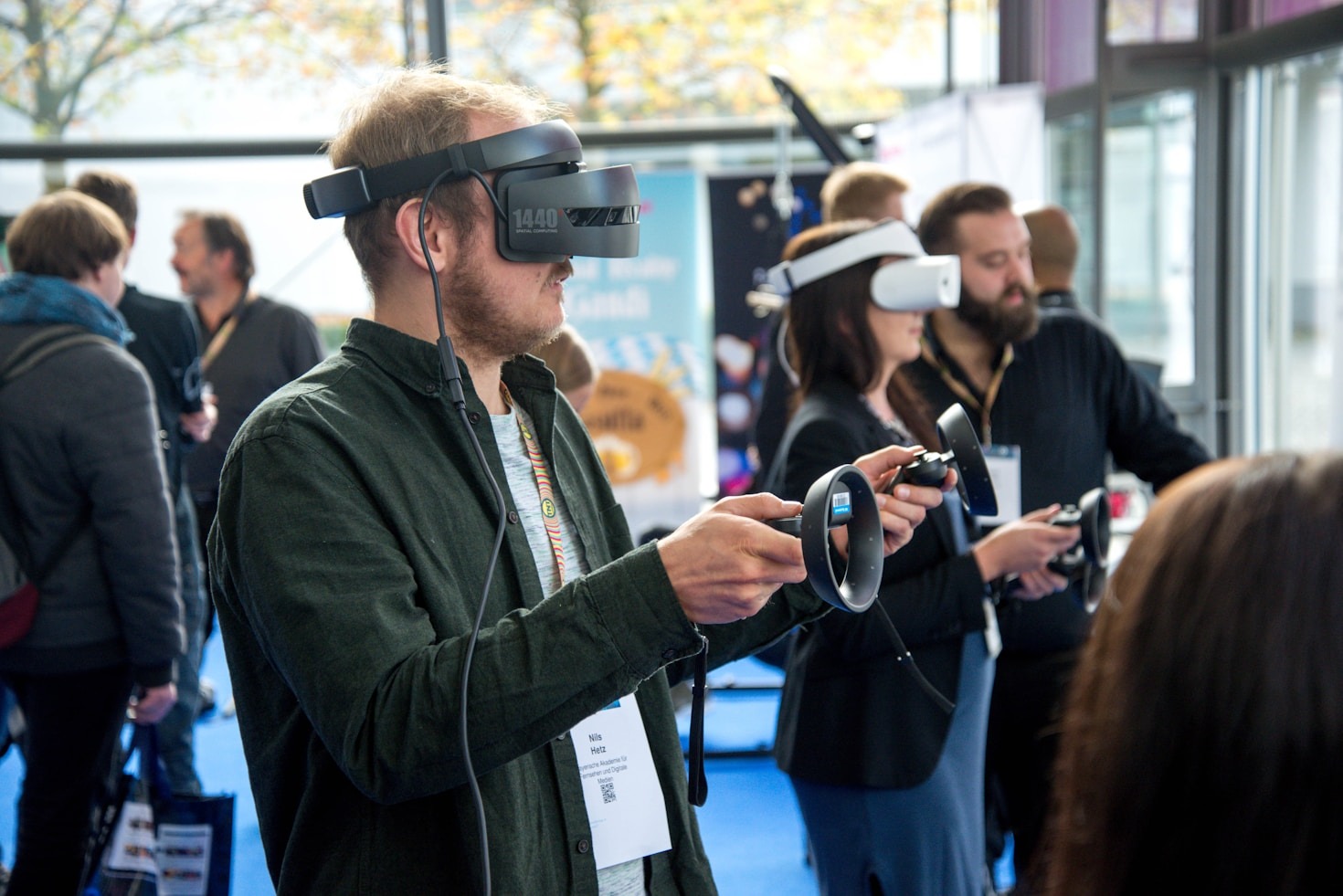
There is absolutely a WOW factor when you try your first eXtended Reality (XR) experience, but what users soon learn is that XR is a very insular experience. It’s hard to share that experience with the outside world, and equally when you are in a full immersive mode the experience misses one key element, spoken interaction. This is where AI can facilitate a big aspect of the experience.
In a classroom setting human interaction helps us to facilitate learning, something missing from traditional digital learning experiences. Is this something that could be addressed through advancements in LLMs and AI?
Extended Reality (XR) technologies, encompassing Virtual Reality (VR), Augmented Reality (AR), and Mixed Reality (MR), are revolutionizing how we interact with digital environments. The integration of Large Language Models (LLMs) into XR experiences is unlocking new possibilities for interactivity, personalization, and dynamic storytelling. Here’s how LLMs are enhancing XR experiences:
- Natural Language Interaction
LLMs enable users to engage with XR environments using conversational language instead of rigid, pre-programmed commands. Whether it’s interacting with virtual characters, navigating immersive worlds, or customizing settings, LLMs make communication feel fluid and intuitive. For example, in a VR game, players can ask characters questions or request hints, and the LLM will generate contextually relevant responses in real-time. - Personalized Experiences
By analyzing user preferences, behaviors, and interactions, LLMs can tailor XR content to suit individual needs. This personalization ensures that each user’s experience feels unique and engaging. In AR-based education tools, for instance, LLMs can adjust explanations and examples to match the learner’s level of understanding and interests, creating a more effective learning environment. - Dynamic Storytelling
Traditional XR narratives often rely on predefined scripts. With LLMs, storytelling becomes adaptive and responsive. Virtual characters can improvise dialogue, react to user input, and evolve the story based on the choices made by the user. This opens up opportunities for truly interactive narratives where users feel like active participants rather than passive observers. - Enhanced Accessibility
LLMs can act as interpreters or facilitators in XR environments, making them more accessible to a wider audience. For example, they can translate user speech into different languages in real-time, describe visual elements for visually impaired users, or simplify complex instructions for beginners. These capabilities ensure that XR experiences are inclusive and welcoming. - Creative Collaboration
In design and prototyping, LLMs can assist creators in brainstorming ideas, generating content, or refining concepts. Imagine an architect using AR to visualize a building design and leveraging an LLM to suggest improvements or provide historical context for architectural styles, all within the same immersive platform. - Intelligent NPCs and Digital Companions
Non-player characters (NPCs) powered by LLMs can exhibit lifelike behavior, making them more engaging and believable. These virtual beings can simulate emotions, remember past interactions, and adapt their behavior based on user preferences, creating a deeper sense of connection in XR environments. - Real-Time Problem Solving
LLMs can act as on-demand assistants within XR spaces, providing guidance, answering questions, or solving problems in real-time. For example, during a virtual training session, an LLM could clarify complex concepts or troubleshoot technical issues, ensuring smoother and more productive experiences.

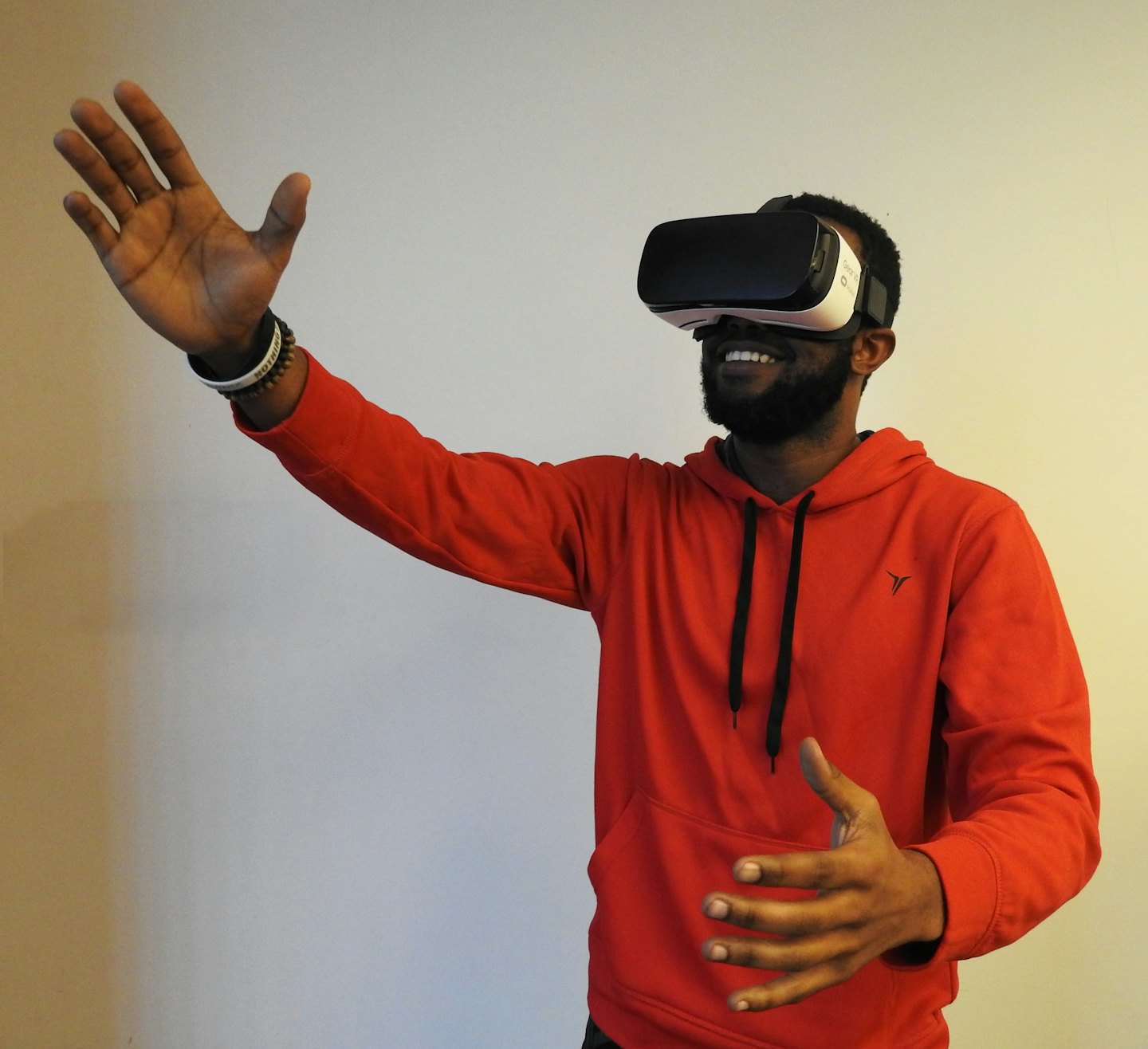
The synergy between LLMs and XR technologies is driving the next generation of immersive experiences that are not only visually stunning but also deeply interactive and user-centric. As these technologies continue to evolve, we can expect XR environments to become increasingly intelligent, responsive, and personalized, transforming how we work, play, and learn in digital spaces.
Wrapping Up with Key Insights
AI can play a huge part in bring XR experiences to another level, to increase interactivity, and in the context of learning, improve the experience for the consumer. However, there is one catch to all of this, hallucinations. LLMs are notorious for hallucinations and this is something that Enablement leaders will need to manage, as they adopt AI technologies moving forward.
Leave a Reply